
Games of “Chance” and Conditional Probability
I. Introduction to Frequentist Statistics
In a few earlier, backhanded comments I mentioned that much of the mathematics that undergirds modern statistics derives from Continental haute couture’s obsession with so-called “Games of Chance” – i.e. gambling on, or ruminating on, things like dice throws, or coin flips, or card games, or… drawing small, colored balls or marbles from giant urns. In what follows I will attempt to demonstrate that the current crop of inferential statistics1 that serve as both (1) necessary characteristics of what is considered #peer-reviewed-science and (2) determinant of which “studies” are used to “prove” X or Y effect – and more importantly, desired social policy position – are not just the completely wrong tools for science, but illogical for that purpose even on their own terms.
We begin first, however, with two critical questions: what is probability and what precisely does it measure? In the answers to these two questions we will see what’s been previously discussed as a philosophical schism between Laplacians and Humians manifest as a mathematical schism between the followers of Thomas Bayes (Bayesians) versus the Frequentists, which generally includes those using the stats of Ronald Fisher, or Neyman & Pearson, as well as the unholy hybrid of both, the NHST – null hypothesis significance testing.2 A person’s answer to the above two questions about probability tells us, from a mathematical perspective, whether one is a Bayesian or a Frequentist – but these two categories each carry with them a cartload of associated philosophical “baggage.”3 One’s sense of the Universe and how it is organized – or disorganized, depending upon your view – hinges upon one’s view of the mathematics that helps to validate Modern Science vs. the one that currently in use by “The Science.”4 We’re going to spend a good bit of time on this subject from a variety of perspectives because, to quote from a book simply by its name, “Ideas Have Consequences.” A culture with bad ideas about science,5 like Russia and China both had vis à vis agriculture in the 20th century, will eventually reify those scientistic ideas into law – i.e. dogma. And the consequences of ideas that conflict with Reality will come washing up on a culture’s shores, in worst cases, like a tsunami – a tidal wave of consequence from an unseen, underwater seismic event.
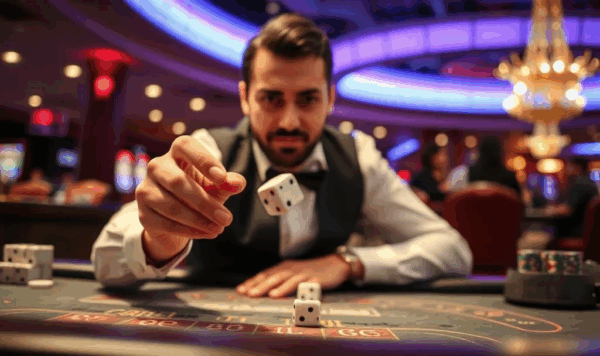
II. Games of Chance?
Card games seem to be a near universal human preoccupation, so we’ll skip their history. A standard deck of cards has 52 cards split between four different sets (“suits”) of cards numbered 2 through 10, and then Jack, Queen, King, and an Ace. There are seemingly endless games with equally various rules that give different values and importance to suits and cards and how they interact. Games can be played alone (solitaire, anyone?), but the most fun – and the ones involving the most money and aggravation – usually involve multiple players playing a “hand” of cards they are dealt and that are invisible – kept hidden from – the other players. In other words, one of the critical parts of card games is that there is an element of uncertainty because players are “blind” to what’s in the other players’ hands. This is true when playing card games with a teammate (partner) like bridge, or even when playing against the dealer with 5 or 6 other players, as in Blackjack (“21”), or when playing community cards with two “in the hole” like Texas Hold ‘Em. Said another way, card games depend upon knowledge asymmetry, but the underlying, and unspoken, presupposition is that the knowledge asymmetry is equal for all of the players.
Part of the draw6 of card games, however, particularly for games that use only a single deck, is that the 4 suits of 13 identically numbered cards and the relatively low number of cards – 52 – means that a person of moderate intelligence can work to overcome the knowledge asymmetry as the game goes along and more information is revealed. The “odds” of what other cards could be “out there” – either in the deck yet to be dealt, or in your opponent’s hands – changes dynamically as the game goes on. Concrete examples work best, but let’s start simply.
You are sitting across the table from the dealer and he asks you – before dealing a single card – “what are the odds that after a thorough shuffle of the cards that I deal you an Ace on the first card?” Simple, yes? There are 4 aces in a deck of 52 cards, so the “odds” (theoretically, anyway) of pulling an Ace are 4 in 52, or 1 in 13… right?
Basic (orthodox) statistics says that the Probability (Pr) of an event (r) is the ratio of favorable outcomes divided by all possibilities and, thus, it is always a number ranging from 0 and 1 – with zero representing impossibility and 1 representing certainty.
Pr = Successful Outcomes/Total Possibilities
In mathematical notation this is written Pr = f/N where f = the frequency of successful outcomes and N = total possible outcomes.
We’re looking for an Ace, there are four possible Aces, and the total of all cards we could draw is 52, thus PA = 4/52, which reduces to 1/13 = 0.07692. Converted to a percentage this means that there is ~ a 7.7% chance of pulling an Ace on the first card he deals you… right? Hold that thought for a moment while we do something a little more complicated just to introduce the product rule.
Statistics also says that the event of two events occurring is the product of their individual Probabilities. That is to say, if we’re trying to find the probability that two events, A and B, occurring, we multiply their individual Probabilities together.
P(A and B) = P(A) × P(B)
For example, the odds of rolling a 6 (or any number 1-6) on a normal7 die is 1 chance in 6, or 1/6. The chances of rolling doubles, therefore, double sixes, or double threes, etc., is P(A) = 1/6 x P(B) = 1/6 = P(A) x P(B) = 1/36. Okay, so far so good. Let’s go back to cards for a little more complexity.
Suppose you wanted to know the Probability that the dealer deals you not one, but two(!) Aces – a pair of bullets – on the first two cards. Product rule says it’s to multiply P(A) x P(B), BUT we have to remember that the Probability of getting the second Ace changes after he deals you the first one. We know that the probability of one ace – getting the first one – is P(A) = 4/52 = 1/13, but the odds of getting the second one, P(B) are now different because you’ve already got one Ace and there is one less card in the deck. So, the P(B) is actually 3/51, or 1/17, thus making the Probability of getting dealt two Aces on the first two cards P(A) x (P(B) = 1/13 x 1/17 = 1/221 = Or there is a .4525% chance of getting Aces dealt back-to-back… right? For simplicity’s sake, I’m leaving out how the other players’ cards being dealt around you, as well as the rules of the game, i.e. what cards you need to win, radically alters all of these calculations. For the moment, let’s just ignore those.
Now make sure to watch this short ~2 min video all the way to the end. Pay attention to the reveal.
Jason Ladanye is what is known in the biz as a card mechanic. (I love that term). It takes a long time to get that good, but tracking and manipulating cards is a skill that can be learned, as all sleight of hand and various prestidigitation can be learned over time. But wait a second, Dale, just what the hell do card cheats have to do with statistics?8
What I’m trying to do is slip something into your subconscious mind about the assumptions that underlie even something as (seemingly) straightforward and mundane as the mathematical probability of a particular card being drawn from a deck after a “fair” shuffle. What does it really mean for a shuffle, or a hand of cards in poker, or the deal in a game of casino blackjack to be “fair”? If you’re playing with this guy in the video above, the probability of you getting one specific card – say the Ace of diamonds – isn’t 1 in 52, nor is the probability of getting any Ace (of any suit) 4 in 52. The probability is, instead, entirely at his discretion when he’s dealing. If he doesn’t want you to have the Ace of diamonds, you’ll never get it.
Pr in reality equals 0.
III. Life as the Limit of Infinite Flips?
Let’s go simpler – let’s talk about the odds of a coin coming up heads or tails on a flip. And no two-sided, trick coins or magicians/con-men this time. Aren’t all coin tosses “50-50” propositions – “tossups?” As a matter of modern parlance, the words and phrases around a “coin toss” have (in fact) come to signify a perfectly uncertain state of affairs:
“Is it going to rain later?”
“I don’t know… probably 50-50. It’s a tossup.”
This is what a modern might even call common sense. But is it? Are all coin tosses 50-50 propositions? Is any toss of a coin equally likely – equally probable – to be heads as it is to be tails?
You don’t have to watch all of it. Forgetting the coin flipper for a moment, it’s a good excuse to introduce you to Prof. William Briggs, author of “Uncertainty,” who discusses some of these same subjects from a more mathematical bent at his Substack.9 As soon as you see the little machine that the good Professor has built, if you had the thought, “wait, that’s not fair…” that is a view of the world through a Frequentist lens.
Much of what falls under the heading of frequentist statistics is the result of the work of Francis Galton, Ronald Fisher, and Karl Pearson. Aubrey Clayton traces some of the mathematical discoveries and currents of thought in the mid-1800s that set the stage for the “Frequentist Jihad” that would successfully dominate in English academe.10 Fisher and Pearson (and others, like John Venn) were joined by Karl Popper in denying (and even ridiculing) the Laplacian view of probability as a quantitative measure of our state of knowledge about the world, and instead they insisted that probability inheres in objects or systems: that probability is a property of an object, like mass, or color, or of populations – creating the fiction of the “average man.” This is the view that also insists that coins have a certain 50-50ness or that dice have a one-in-six-ness. To be fair, these beliefs are not completely arbitrary and have both mathematical and a certain intuitive appeal to them.
For example, if you were to “roll” two “fair” dice – and we will allow the circular requirement that a “fair” dice is one weighted such that the weight is uniformly distributed no matter which side is facing up – over and over again, thousands upon thousands of times, where a legitimate “roll” consists of throwing the dice through the air onto a completely flat, level piece of felt, and the dice must travel and hit both the felt table and then a back felt wall at least 5 feet from you, and then come to rest on the felt table, it does seem to comport with our sense of how things work that over a sufficient number of rolls you would eventually see a distribution of die totals between 2 and 12 that comports with the distribution derived from the mathematical probabilities of each one. Which is to say, that you would find empirically that the probability of rolling a 2 (or a 12), is ~1/36, and the probability of rolling a 11 (or 3), is 1 in 18, over time and that this can be described by a limit or sum function such that it all seems to work out perfectly. The same seems to apply with even more force for the 1 in 2-ness of a coin being flipped onto a table.
But all of it is an illusion. First, there is no world in which anyone has ever flipped a coin or rolled dice an infinite number of times; and so the use of mathematical functions that rely upon such constructs should at least suggest that we’re not dealing with anything empirical.
More importantly, it only takes a moment to recognize that what is going on in “games” of “chance” – including cards and coin flips and dice – is not “random chance” at all, but very carefully controlled and intentionally enforced ignorance, and knowledge asymmetry, and that is how the public loses its fucking money in casinos to the tune of billions each year.
What do I mean? Let me change the requirements for a roll by just one – instead of me throwing the dice each time, I’m going to defer to my little mechanical dice-roller, the CasinoCrusher2000, who tosses the dice with exactly the same NewtonMeters of force, angular momentum, and loft – every. single. time. forever.
Do you now have the same confidence that over infinite rolls that the numbers will have the expected statistical spread? Gulp. Briggs already showed you above you can do the same thing for coin flipping and very quickly turn a coin flip from a 50-50 proposition to something more like 85-15 in favor of whichever you want if you use a device that flips with even a mechanically calibrated amount of force each time.
IV. Who are You Calling Random?
Coin flips and dice throws aren’t random events at all. Note to Statisticians and Jurists: Coins and dice (and playing cards) follow the same laws of physics as rocket ships, bullets, catapults, helicopters, and tennis balls! Coins and dice and cards are relatively simple systems involving small amounts of force, very little wind or other environmental concerns (like ocean tides). The (primary) thing that makes them seem “random” is us – we completely ignore our own presence – the very part that makes it random each time. If your thumb had a little gauge on it that each time gave you an exact readout of how many units of force your coinflip was generating? It wouldn’t take you more than a few weeks to be able to figure out how to flip a coin such that it landed whichever side up you wanted in your other hand. Maybe not 100%, but you would suddenly, magically have destroyed your coin’s 50-50ness and your dice’s 1-in-6ness.
Do you hear me? Table games are all set up so that the House eventually wins. It’s a con; a very sophisticated looking three card monte. It’s Jason Ledanye manipulating and tracking cards, but you can’t see it and think that it’s a fair deal every time. You have no idea why he always has a pocket pair better than yours. You can’t see yourself getting cheated; and Vegas also does it actuarially by its payouts being conservatively lower than what the odds are and cost to bet given the enforced conditions of ignorance.
Briggs has related in a private conversation (and I haven’t checked, but I’ll take his word), but it is a crime to measure or attempt to measure any of the physical characteristics of these systems, like the felt on the table, or to use a machine to throw the dice, etc. Which is to say, games of “chance” are games where you’re specifically forbidden from using any of the tools of physics or science to improve your chances of winning – i.e. you also can’t count cards.
The “randomness” of the outcomes is reinforced by your unknown amount of force, or not being allowed (or able) to count six deck blackjack, or the requirement for the dice to knock around off of a wall. That is what creates the “randomness” of these games. If instead you used a machine throwing into beach sand, you can imagine that it could get sixes every time because of the consistency of the “roll” and lack of bounce of the dice. Same for coin flips.
All of the above are measures intentionally taken by Vegas to make these games have outcomes – or probabilities or odds – that match these idealized statistically consistent numbers, so that you can bet your ass (or your house) that the dice on the tables in Vegas do all have 1-in-6ness, and every coin flipped has 50-50ness because Vegas ultimately secures its money the way insurance actuaries do: Vegas knows what “the odds” – i.e. the probabilities are – and it pays out conservatively lower than what the chances. For example, you can look up roulette on Wikipedia and find that in either the 37 slot wheel (European) or the 38 slot (American) wheel, the probability of getting the single correct slot is 1 in 37, or 1/38, but if you win, they only pay 35 to 1. The “House edge” or “expected value” is 2.7% for a Euro (respectable con-man) wheel and 5.26% for a (greedy capitalist con-man) American wheel. Over the long run, the House wins all around, though there will be occasions where statistical anomalies occur.
All of which is to say that the mathematics used by frequentists statistics is derived not from “games of chance,” but from rigged games, where artificial conditions are enforced in order to ensure that a “fair result” is the long-term outcome. That hardly seems to be a good mathematical basis for judging what is and isn’t “science.” Or viewing life through the lens of frequency distributions.
Next time we’ll look at this in a different context – medical testing.
- “Cookbooks” in Jaynes’s vocabulary. ↩︎
- I acknowledge I am cutting out a breathtaking amount of mathematical intellectual history. For a comprehensive treatment of this subject, the best book is Aubrey Clayton’s “Bernoulli’s Fallacy: Statistical Illogic and the Crisis of Modern Science,” Columbia Univ. Press, 2021. My audience and writing is, however, lawyer-slanted, and if my own experience is indicative, besides not being able to pass O-Chem, law students and lawyers have an almost pathological fear of working in the quantitative realm… except for billing hours, of course. In that one domain they do seem to find the necessary mental focus and energy to manipulate decimal points, work in base 60, conduct long division, multiplication, and solve rudimentary linear algebra problems without pencil or paper. ↩︎
- “Priors” is what Bayesians would call all of that. ↩︎
- We will cover some small parts of that third rail of #FormerCurrentThings because the statistics used by pharma is Frequentist statistics. ↩︎
- Or social and political organization, or economics, or human rights, or energy policy, or liberty… ↩︎
- HOHO! Now that’s a good pun right there. ↩︎
- None of those weird, Dungeons & Dragons dice, with 4, 12, and 20 sides, okay? ↩︎
- I met a guy years ago at a friend’s St Patty’s Day party in South Boston – somebody’s brother-in-law who served in the navy in the late ‘60s – and he could do card tricks like you see people do on TV. He was that good. When he handled a deck of cards, it was evident from the moment he picked them up that he could manipulate cards without you ever having any idea. You couldn’t possibly play cards with him and if he won not suspect him of having cheated. I asked him about that and he laughed. He said that once he got that good, when he was still in the Navy, when he played cards for money he would always pass the deal. Always. That was my first realization that card games rely upon the fact that either the player-dealers are all equally inept at handling and shuffling cards, or that an independent, inept dealer is shuffling and dealing the cards. ↩︎
- The second reason is because much of the foundational philosophical background predicate that I’m working off of comes from the first 4 chapters of “Uncertainty.” Every lawyer and scientist should read and understand it. Chapters 5 and higher require more technical work. ↩︎
- Clayton, Bernouilli’s Fallacy, pp. 122-126, and Ch. 4, “The Frequentist Jihad,” pp. 131-161. ↩︎

If they were made by man, they can be Firsted by man.
On topic: the probability the Dallas Stars will be whiny bitches tonight is 100%.
Edmonton’s better. MacDavid really is *that* good. Looks to me like it will be a rematch of last year’s Cup Final – I have Edmonton winning. That’s who I had in my bracket, but I thought carolina would beat Florida. I thought the Panthers were more banged up, but they’ve been a wagon. As much as I dislike ’em, I’m always glad to see a serious defense of the Cup by last winner, even if it’s those douchebags in Florida.
Given a yacht with a length of the 55.9-meters, a beam of 11.51-meters and a draft of 9.73-meters with a mast of 75 meters what is the probability it sinks by its design or because of the crew’s mistakes? Or could it be both? Perhaps we could stipulate the first probability…
Damn. Nice yaaacchhht.
A bit damp nowadays.
Moist. The yacht is ‘moist.’
Unmoor yourself from such muggy thoughts. Moist. Must moisten your humid temerity with purple prose. That snake will hunt.
Arcadia doors do not below on maxi-yachts or Mexican submarines. Put them on and eventually you have trouble.
BELONG not below
If they truly were hit by a tornado, I’m not sure watertight doors would have saved them.
to ensure that a “fair result” is the long-term outcome
Smiles at a new tactic to take with those arguing for the rich to pay their fair share.
Obligatory.
Admittedly I only skimmed the post and I’m somewhat of an maroon, but is the argument that the casino not allowing you to influence the outcome is influencing the outcome and thus rigging the game? Seems mighty circular.
No – it’s the point of the local authorities (on behalf of the casino) making it an aggravated misdemeanor or whatever to measure or attempt to learn *anything* about the “setup” that might give you more information to make better decisions – i.e. bet smarter. i.e. The actual physics of a dice rolling – e.g. the type of felt, the padding, temperature, air density, etc, or counting the cards.
Fair enough, local authorities can fuck right off, but the casinos are still gonna ban you if you figure out some way to “beat” the house. I don’t consider gambling establishments basing their odds on ‘fair’ rolls as somehow rigging the game. The game is rigged from the get go, it’s gambling. That’s the entire point, the odds are against you, but every once in a while you end up on top*.
*yes we all lose in the long run, such is life.
Just a very minor point of clarification so there’s no confusion – there is no jurisdiction in the US that I’m aware of where card counting is illegal, misdemeanor or otherwise.
Casinos will bar you from playing BJ in their casino if analysis of your game leads them to believe you are counting, but there are no legal ramifications. In some places, local authorities have actually prevented casinos from baring counters; The casinos can then simply place bet limit spreads or cut the shoe much shallower. A counter makes all their money from the variance in the deck and making large bet spreads when the remaining deck is favorable to the player vs. unfavorable. If you limit their ability to take advantage of favorable variance by limiting the amount they can bet when the deck is favorable or by limiting the knowledge you can have about the remaining composition of the shoe by re-shuffling frequently (or continuous shuffling), card counters have no player advantage.
I am amused at “the house always wins”.
I don’t gamble because I find it boring AF but that’s another good reason.
The point isn’t whether it’s illegal or not – the point is that it’s the “house” sticking its fingers on the scale to prevent you, the person spending money, from having any information that is actually relevant to knowing how the physical system works, whether it’s the dice, or the felt, or the roulette ball, or the wheel, or anything.
It’s an entirely artificial construct in which ignorance is strictly enforced against a person who has an interest in the outcome of a physical event that is supposed to be “above board” – ahem, “fair.”
When in fact that term is really just sophistry for “the conditions of enforced ignorance that renders this entire process attributable to something we call luck” – which is NOT what’s happening. There is no “luck” or “chance” in how dice drop in response to gravity and a force tossing them. Ditto for coins.
Cards do not merely “appear” by violating the laws of physics in a frequency distribution. They’re shuffled in an entirely understandable manner and physical process.
I think we’re talking past each other to some degree. “Fair” to me means that the outcomes are perfectly predictable in the long run as a well known distribution. Its not that it’s fair in the sense the casino and I have equivalent knowledge or equivalent outcomes. But it is “fair” in that I can ‘easily’ compute exactly what my expected value is. It’s just that, in almost very situation, my EV is less than 0.
and that is how the public loses its fucking money in casinos to the tune of billions each year.
The public loses its money in casinos because casinos know exactly the frequentist long term outcome for a given set of rules, and they have the time and customer base to run as many iterations to converge to the mathematical certainty that the final distribution will favor them. As does, for example, the black jack card counter.
That’s why you won’t see a coin flip game in a casino unless it’s advertisement. The casinos know that, in the long run, they will have no house edge – it will be 50-50. That’s why roulette has two (or in a very ‘good’ wheel that don’t seem to exist anymore) guaranteed losers, the green 0 and 00. That’s why you have seemingly esoteric rules in black jack – to assure that the distribution of wins over the long term, high number of ‘experiments’ (the time horizon the casino is working in) will approximate the mathematical probability distribution.
I don’t know how any of this is a dig on ‘frequentitsts’ statistic: All of which is to say that the mathematics used by frequentists statistics is derived not from “games of chance,” but from rigged games, where artificial conditions are enforced in order to ensure that a “fair result” is the long-term outcome. I see that statement as more of “frequentist statistics are a mathematical formulation of observed outcomes; our games work out because that mathmatical formulation is accurate over the time and spatial horizons we the casino care about” – the casinos make money *because* the frequentist statistics are accurate.
Do you now have the same confidence that over infinite rolls that the numbers will have the expected statistical spread? Yes – if they don’t I know someone is rigging the outcome by some means. The fact that imperfections in e.g. dice manufacturing or actual manipulation by the person running the experiment can/will lead to deviations from the expected distribution doesn’t invalidate the distribution. In fact, deviations from the expected distribution and to what degree give you a clue about the degree of manipulation or imperfection in the experimental setup, at least in the simple case you laid out here with minimal confounding variables.
As to the whole question of whether ‘probability’ is property of things just like mass or color or… All I can say is I’ve worked with lots of people who do frequentist (and bayesian, almost always in tandem if not explicitly recognized) analysis of physical systems and I don’t know of a single soul who would make that statement. It has always seemed a bit straw-man to me – the philosophers who argue about such things make an absurd statement like that and thus invalidate the whole practical implementation.
Written as someone who sees the value of a Bayesian approach; and almost all practical applications of statistical analysis of physical problems integrate aspects of both approaches to understanding the system.
PM – Since I’ve got two more of these coming, rather than directly respond, let me just ask you to come back around after numbers 8 and 9 and let’s discuss frequentist statistics in light of the next two.
Also – if it’s your jam, I would strongly recommend “Bernoulli’s Fallacy” by Aubrey Clayton.
There are some circumstances where frequentist statistics are useful, but the NHST hybrid (taking exactly the things that Fisher and Neyman and Pearson disagreed about) and combining it into hypothesis testing and p-values has been an unmitigated disaster. Because there should be no expectation of replication, given the system of logical inference upon which the NHST operates.
Re: Sticking around for 8 and 9 – Of course, I look forward to them.
NHST etc.
Any paradigm for analyzing data/experiments, indeed the very way an experiment is set up, can be manipulated (or be more prone to error), including a Bayesian analysis, but that doesn’t invalidate the paradigm or require that we pick one or the other.
The casinos know that, in the long run, they will have no house edge – it will be 50-50.
There is a house edge – they pay out 95 cents against a 1 dollar bet. Now, would you play that game? No, because you don’t perceive it as a “fair result”.
I do perceive it as a fair result. It *is* the ‘fair’ result given the conditions of the game that you stipulate. I’m just not going to play it.
I think we understand each other. Let me offer a hypothetical and a couple of points: let’s suppose we have a machine thrown a “fair” – manufactured in a Vegas casino’s supersecret underground die-making facility – dice a million times. Now, let’s suppose that it turns out that in a billion throws you don’t get actually each of the six sides an equal number of times. What if it turns out that the dots on the face have enough weight that over billions of throws, one side, the number 1, being just microscopically lighter with only one dot, that it will land upright more often than other numbers, and six will stay on the bottom a little more?
Does that mean the dice lost their “fairness”? Are the dice broken – did they lose their 1in6ness?
Next point – the frequentist uses a limit function – as N tosses approaches infinity, the number of each side showing up should be 1/6… But that’s a mathematical models to derive the requirement that a “fair” dice must have equal outcomes without any regard to the points I’ve made above about the actual physical system of throwing dice.
It is a model – it is not reality. Then frequentists say that by definition any die that doesn’t conform to their definition of a fair one is therefore not a “fair” dice.
There has never been anyone who actually threw dice infinite times. It never happened. It’s a model, not reality. And that entire model is built on hidden assumptions that are then enforced to the point of excluding physical evidence to the contrary.
I guess I’m more comfortable with abstraction. To the degree reality deviates from abstraction gains us insight into the physical world. While I have issues with Plato in general, I don’t have a particular problem with the Platonic form – not it’s physical reality, but rather as an abstraction to test against and gain insight into the physical world. Not that, if your physical world deviates from the abstraction that the physical world is somehow wrong, but rather that how the physical world deviates from the abstraction and to what degree can tell you something profound about the nature of the real system.
A truly fair die would have enough pigment in the depressions to counterbalance the weight removed from them.
Pedantically, you won’t get the same number of all six faces showing up after one billion rolls, as one billion is not evenly divisible by 6.
Thank you, for these. I’ve found past iterations both thoughtful and thought-inspiring.
Will read and comment further. Shine on.
Thank you, good Sir Evan!
I’m not sure what your comment about moistness means, but I find it enlightening and humorous.
Just playing with the idea/truth that “moist” is the most unpleasant -sounding ‘English’ word.
It really is disgusting, ain’t it? Like pulling your neighbor’s cock outta sloppy seconds and eighths outta Winston’s Mom.
Moist.
I always hated “scallion”: whiny.
I read it all, now my brain hurts.
You folks are amazingly brilliant, I would subscribe to your news letter, but I cant reed gud,
Thank you for the series. Looking forward to posts eight and nine.
You should hit on eight and nine.
“You should hit on eight and nine.”
OMWC dating advice?
LOL. Nice.
🏌️👏
From the dedthred:
Whats the one thing you dont want to hear from the guy next to you at a urinal?
“Say- nice watch”.
That’s solid.
“What I’m trying to do is slip something into your subconscious mind about 𝒕𝒉𝒆 𝒂𝒔𝒔𝒖𝒎𝒑𝒕𝒊𝒐𝒏𝒔 𝒕𝒉𝒂𝒕 𝒖𝒏𝒅𝒆𝒓𝒍𝒊𝒆 even something as *(seemingly) straightforward and mundane* as the mathematical probability of a particular card being drawn…”
Variability is built into our species, into each human. We act like we treat them like the random 4 Aces in the deck, but the scattershot nature of humans unwields that, disjoints it, as people are far-more complicated than a deck of 5.
We’re such social primates, we can’t help We always think the Other thinks as Us. But that isn’t even true with your loved ones. But the compartmentalization continues cuz it’s all we know.
So it goes.
*deck of 52.
“It’s an entirely artificial construct in which ignorance is strictly enforced against a person who has an interest in the outcome of a physical event that is supposed to be “above board” – ahem, “fair.”’
This is not incorrect. However, my posit is that the price one pays to gamble, whether or not one wins /loses, depends on the experience provided. You’re paying the House for entertainment. Odds of winning /losing big or small relies on the game and players, but casinos+ are selling the Experience. It’s why hotels there are so cheap.
In ’95, 8yo Ev was with 14yo Bro and Dad while Mom took her mother to Egypt. (Damn. We weren’t wealthy, tho sounds it. Mom made more teaching public school than Dad did writing for the Evansville Courier.)
We stayed at The Excalibur. 8yo Ev in Vegas, with legit jousting tournaments, fights and dragons breathing fire. I was in fucking heaven. Take me back. DAMN. Epic shit, right there. My Calvin & Hobbes -brewed brain was alight with joy.
Mornin Glibfolk!
🐪🤪🌨️☔️
https://www.youtube.com/watch?v=aB5E_GrVH3A
🎶🎶
Morning, Sean.
🖖
Good morning, Sean, U, and Ted’S.!
Morning, GT.
How goes?
Very well, thanks! Should be another quiet day at work (with very little mail!) Then we have a Dragons game tonight – cloudy, but without rain!
How are you?
I managed to stub my toe this morning. I also realized I went to bed without dinner, but I have breakfast now, so I’m good again. I had to leave the 3D printer going unattended to go in to the office… 🤞 But it was almost done when I left. This friday I have my stupid impulse purchase of Gin arriving. I’m debating doing a review for the halibut.
I don’t know if I’ve ever knowingly drunk gin, unless it’s one of the (many?) ingredients in Long Island iced tea, which I learned is much too tasty for my own good and thus avoid. I would have no idea how to do a review of it. Or of halibut, for that matter. 🤷♀️
When do we get to see GT drunk on gin? :-p
I once had Bombay Sapphire. It tasted like twigs, so I gave the rest of the bottle away.
@GT – According to wikipedia It is in there
[ suggests UCS try retsina instead ]
https://nypost.com/2025/05/27/us-news/multiple-people-shot-at-connecticut-mall-gunman-still-at-large-reports/
“ The suspect is described as a man in his 20s who used a semi-automatic pistol, NBC reported.”
Wow, that’s some top notch reporting, Nothing But Commies. 🙄🤡
Way to assume the suspect’s gender.
Witnesses usually include an estimate ethnicity.
Apparently he had no hair, no clothing, and no approximate height or weight. Should be easy to find.
suh’ fam
whats goody
Should be a good week- we’re indoors and its raining.
On the other hand, the remainder of my week is at the poop plant.
Allons-y !
Someone’s got to do that job. You’re providing a vital service.
They perform the vital servic- I think they serve approximately 1M households in NE Ohio.
Im just helping them comply with the emissions limits the EPA give them.
In this case, the facility has installed continuous emissions monitors (CEMS). Im performing a relative accuracy test of those units using my equipment. The program is called a RATA.
Good reading if you have insomnia:
https://www.ecfr.gov/current/title-40/chapter-I/subchapter-C/part-60
😣
I was just trying to help.
I am sorry Ozy for missing this. I go to bed well before sundown.
There is no such thing as probability, chance, options, choices, randomness, variables or magic. We live in a deterministic universe that goes about its business according to a fixed set of laws. Everything that has ever been, is now and ever will be is predetermined and inevitable. What we do have is ignorance. Our ignorance about the current state of things makes randomness, chance etc. appear real and because we cannot dispel our ignorance we have to operate that way.
Put 1 mole of sodium with two moles of chlorine together and you get 1 mole of table salt. Every. Single. Time. Even if you do it Tree (3) times you will not magically get a puppy or a jade statue or a pair of tennis shoes on one of those tries.
BS. If you take that same NaCL2 and pour it in a circle around you, evil spirits and demons cant cross it to get to you.
Magic!
/saw that on some TV show
Oh. I forgot about that. I have to go back and rethink my entire view of the universe. Shit.
Also….If you have a perfect dome and balance a standing pencil on its point at the very top of that dome perfectly the pencil will remain there for an indeterminant time and then suddenly go off balance and fall. That amount of time is never the same. I have heard some very smart people puzzle over this phenomena. I have heard those people claim that it proves randomness.
No. It doesnt.
The earth is rotating and orbiting the sun which is rotating and moving, dragging the earth along with it. The layers of the earth are not rotating all at the same speed. The moon is orbiting the earth. The other planets…starts, galaxies are all moving. That ‘perfectly balanced’ pencil is subjected to a constant flux of gravitational and centrifugal forces, never the same.
Your coin tosses and dice tosses cannot take all of that into account. Again, everything is predetermined and inevitable. You just cant know what that is.
It must be very sad to exist in your world where you have neither agency nor free will.
Dont fall into the nihilism trap. We may not have those attributes but we have to operate as if we do. In a weird way our ignorance is beautiful.