

In ruminating on keto/carnivore type diets, EvilSheldon commented that he thought the main – 95% – mechanism for the effectiveness of those types of diets is getting people to eat less. I guess the implication of that is that the effectiveness of low carbohydrate diets is due to the energy balance theory of metabolism – Calories-In-Calories-out (CICO) and I think someone followed up with a comment about CICO. Anyway, being an advocate and practitioner of keto along with time-restricted eating and fairly regular periods of pure carnivore, it triggered me – as many of the articles and comments here do – to think about my premises and how I understand these things to work. Of course, it started as an entry in my ‘Random Thoughts’ collection of half formed ideas but grew in length as I fleshed it out and became more appropriate for a single-issue topic.
What follows is a non-exhaustive set of thoughts about keto, specifically in regard to its impact on how much we eat and what it says in relation to the CICO theory. For completeness, the alternative theory about nutritional intake and metabolism is loosely known as the energy partition theory (I don’t think it has a cool acronym yet, so clearly can’t be valid science), where hormone production and signaling is the main driver of metabolic health, including obesity or lack thereof. In this context, the quality/type of the CI part of CICO and how it impacts hormones and signaling in the body is an important question. I’ll largely leave out what I think are a lot of important metabolic benefits of keto type diets and focus on caloric intake and CICO.
Now of course, CICO is at some level tautological. The question is really does the complex human metabolic system respond and react to CI in such a way that it is physically possible to naturally control both CI and CO in the long term independently of the composition of CI. If CI < CO, then you will lose weight, for as long as your body will allow you keep CI low and CO high through sheer willpower even if you destroy your metabolic system in the process – but we’re not focusing on general metabolic health. I think that’s EvilSheldon’s proposition – keto allows you to more easily, some might say effortlessly and naturally, control CI. I will quibble with the percentage but that’s not important – it is certainly a benefit of this type of eating.
The main problem with CICO is that body is not a bomb-calorimeter; a pound of cardboard has a caloric value, but if you stuff it into your pie-hole (CI) you will get minimal usable energy from it and CO will ~= CI, after it rips your intestines to shreds. The implication that people are making when they talk about CICO – eat less, exercise more – is that this is all that matters vis-a-vis weight loss. They cast it as a matter of will power, disregarding what the CI do to hormone levels and signaling which will in turn change what CO is. Very rarely do people mean or even understand true CO when they say eat less, exercise more. They really mean “starve yourself and get off your fat ass and exercise”.
As an illustration, consider Type 1 diabetes. This is an autoimmune disease in which the pancreatic beta cells responsible for insulin production are destroyed by the body’s immune system. Insulin is the signaling hormone that tells the cells of the body what to do with energy, CI, especially if the CI produces high blood glucose levels (high carb), both at the muscle and the fat tissue. Without insulin, you will not store energy. With high insulin (signaled by high blood glucose levels from high carb CI), you will store CI in your fat tissue and very little will be available for immediate energy needs. There’s a thing called diabetic bulimia, diabulimia. With this disorder, the type 1 diabetic will deliberately under-dose their insulin. Let’s never mind the very dire downstream impact e.g. death – under-dosing insulin allows the diabetic to eat whatever they want in whatever quantity they want, and they will not gain weight. The existence of this effect should put the simple CICO theory to rest immediately. CI is very high and ‘traditional” CO can be minimal – they can sit around and play video games or stare at the wall all day – and they will not gain weight. One can argue, correctly, that CICO really does hold, CO must be a prodigious amount of shit. But that’s not what is meant by CO traditionally in the way it’s commonly talked about – we never measure true CO, just manifest physical activity.
As another illustration, consider basal metabolic rate – this is the energy your body uses just to maintain itself with 0 outwardly manifested physical activity, an intrinsic CO. There are studies that show an increased metabolic rate on keto style diets (though not fully established at this point). One of those showed a 300-400 calorie increase in metabolic rate on keto style diets (Figure 3) – that’s roughly the equivalent of 30+ minutes of moderate exercise per day. By way of explanation, since the basal metabolic rates in all groups decrease, just 300-400 calories less in the very low carb arm of the study, there was a run in period where all groups were monitored to establish baselines and then lost 10-15% of body weight – that lowers you basal metabolic rate since you have less to maintain – followed by isocaloric diets with different macro nutrient composition from standard high carb town to very low carb/high fat. The latter group maintained very close to their initial pre-run-in metabolic rate while the other groups dropped by several hundred calories. That’s a very significant effective increase in CO that is never measured or considered by traditional “exercise more you lazy bastard” CICO advocates. Yes, CICO still holds, but not in the way we are conditioned to think of it.
Analogous to the above is the thermic effect of food. This is effectively the amount of energy the body must expend to process the food you intake to make it available to the body. Fat and carbs have a low thermic effect – they are relatively cheaply processed by the body and used or stored, whereas protein has a high thermic effect. The body will expend a lot more energy to process protein. So same CI will lead to very different – and not accounted for by traditional CICO advocates – CO.
Another example is ketone production – the ‘keto’ in keto diets. Background: Ketones (largely acetone and Beta-hydroxybudyrate) are produced in the liver by the oxidation of free-fatty acids. Free-fatty acids are released from your fat cells during lipolysis. Lipolysis only occurs in a low insulin environment since high insulin levels suppress the the activity of lipase, the enzyme that breaks down triglycerides into fatty acids and glycerol. So insulin signaling tells the fat cells to take up glucose from the blood and store it as triglycerides and in addition prevents lipolysis by blocking lipase activity. If insulin is high, you will store fat and you will not burn it. High serum insulin is triggered by high blood sugar levels since even a small amount of excess blood glucose can kill you. A low carb ketogenic diet is effectively an insulin lowering diet since the CI do not produce any significant increase in blood glucose levels. In contrast, a high carb diet, especially simple carbs and very frequent eating, will maintain high blood glucose levels and hence is a high insulin diet that will effectively shut down the possibility of fat burning (along with a bunch of really bad side effects of chronically elevated insulin – but we’re talking about CICO here…). So with that background, what do ketones have to do with CICO? Well, ketone bodies are effectively little packets of energy – they have a ‘caloric’ value. What if you don’t need that energy? Unlike glucose which will be stuffed into fat cells, the ketones will be excreted. One way to test ketone levels is urine strips, so you are peeing out little bundles of energy. You also breath them out. But that CO is never measured/considered in the CICO ‘calculation’.
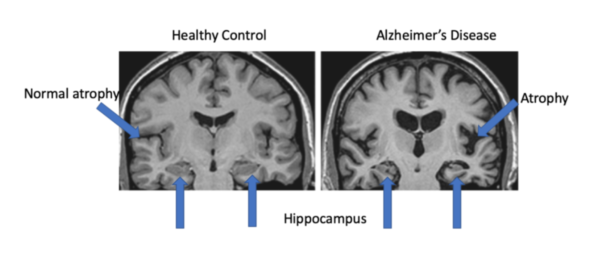
As an aside and against the spirit of avoiding general health as opposed to just focusing on fat loss/CICO, I’ll mention dementia. There’s a growing understanding of dementia as a metabolic disorder. Basically, the brain is starved of energy and hence brain tissue begins to die – I’m sure you’ve all seen the images of shrinking brains and destroyed tissue. But why? Well, if the brain is relying on glucose for energy, it is relying on insulin signaling; even the brain cannot take up glucose without insulin telling it to. However, if insulin is chronically (over a lifetime) elevated, the brain can become insulin resistant – it responds less effectively, if at all, to insulin telling it take up glucose. This is effectively what happens in Type 2 diabetes as cells in the body become insensitive to insulin signaling after a lifetime of being continuously bathed in it – Type 2 diabetes is not a disease of too little insulin, it is a disease of too much. The parallels are such that some have taken to calling some types of dementia Type 3 diabetes. What do ketones have to do with it? Well, ketones do not require any hormone signaling to be taken up by the brain. Indeed, the brain is glucose-sparing; if a healthy individual with normal insulin and glucose levels is given exogenous ketones, the brain will preferentially shift to taking up ketones for energy. So while ketogenic diets may not be able to reverse dementia (though some studies indicate promise in slowing or halting progression), they may play a part in avoiding it in the first place.
So in conclusion – bet you were wondering if you’d ever see those words: Yes, low carb/ketogenic diets are very effective at controlling the CI part of CICO as EvilSheldon proposes. You don’t really need a complicated study to see that. Just eat a nice fatty steak and see what happens if someone puts another in front of you – it’s not that you can easily resist it, you just really don’t want to eat it. But if you just ate a bunch a fries and someone puts another basket in front of you or a piece of bread, you’re going to keep grazing. But it also alters the CO side in ways that are not usually accounted for by the “eat less, exercise more” (which will, incidentally, drive hormonal balance in directly the opposite way of what you are trying to achieve) crowd. And more importantly promotes a stable hormonal balance that doesn’t drive disorder. You will not win the CICO battle on a modern American diet, evolutionary biology will thwart you at every turn and you will lose. To me, controlling how much you eat is not the primary benefit of ketogenic diets, it is the metabolic stability that they promote and the energy partition/storage that they enable because of the macro-nutrient composition; controlling CI easily/naturally is just a side effect of that.

#ketolife
#🥑
I eat lots of those.
🤮
UCS, UCS, whatever are we going to do with you?
A fresh, firm avocado with a dash of salt, maybe a sprinkle of chipotle or black pepper; sublime.
Now over-ripe mushed up guacamole crap, I’m right there with you at the vomitorium.
🤢🤮
Avocado in all of it’s forms is a vomitous slime-pear of horrible taste and texture.
Grilled, with some shredded cheese, dash of salt, and a splash of balsamic vinegar.
That’s not enough to cover up that flavor. Just abandon the green grossness.
UCS, was the store out of durians?
Try the Asian market
I like avocado flavor corn chips lol
Otherwise gross
On the subject of durians, I’m curious to try one. Fresh, preferably. I have a hypothesis that my near total lack of a sense of smell (congenital, from birth) might allow me to eat it without violent rejection.
As for avocados, it’s the sliminess that turns me off. I have found that certain food consistencies are also a turn-off, i.e. buttermillk, raw or cooked tomatoes (but not catsup or soup), pears, plums, and other stonefruits.
Sad!
Pears are so wonderful.
Gritty texture?
But yeah: mmm, pears.
I think it may come down to the specific variety of pear. I’ve found “ordinary” (Bartlett?) pears* to have a gritty texture I don’t care for. A D’Anjou pear, though, is magnificent.
*whatever variety of pear is typically used in canned fruit salad 😖
Also #🥩
And those.
Calories-In-Calories-out observation /thought: I’ve weighed ~132, my powerlifting weight class, since high school. I’ve never changed diets or even really paid attention. (Certainly not enough to have a ‘plan.’ My bro is the same, but ~114 (with several plans.)) I’m pretty indifferent about ‘what’ food I eat. Facetious but truthful, when folk ask what sort of food I want, I sometimes answer “Caloric.” If I get above 140, rarely, I tell myself to eat less. If I get in the 120s, the opposite. I stay in the 130s and that’s just fine. (I eat *a lot* of candy.)
Birthday humblebrag, I s’pose, but as a reasonably smart kid, raised gymnast powerlifter, McBusy Fingers and all, my body burns off TONS of energy just *being.* I suppose I’m back onto my pushup kick. Now a daily thing, I remembered how nice it was to have those productive, positive chemicals flowin’. Now, especially by the end of Walmart pickin’, I’m in the best overall shape I’ve been in since college, likely.
Weight issues, how your body handles the prosperously abundant calorie trough of modern life, is 90% genetic, methinks. Barring something pretty dramatic, I won’t have to worry about my weight, and I’ll keep a full head o’ hair, if Mom’s dad and bro hold out. I do have that going from me. Dad’s side is all bald.
90% genetic
I might quibble with the exact percentage but it is certainly part of it. I think there’s something like 50%+/- of the population that is ‘carb sensitive’, genetically. They are going to have a problem in the modern world of high carb, high sugar, and hence high insulin.
The other issue is the focus on weight. Sure, people may not need to pay attention to macro-nutrients too closely to maintain weight, but that is not, ultimately, the real goal – it is often/most of the time a very good indicator of the actual goal with is metabolic health. There’s such a thing as thin-outside, fat inside, where ‘fat inside’ includes both visceral fat (very bad for you) and hormonal imbalance.
So maintaining weight is an advantage of ketogenic diets, certainly for a significant part of the population. But I think it is also a valuable tool for general metabolic health for everyone – the value of low insulin cannot be over-estimated. You can get a lot of that just from not eating all the time regardless of macro composition, though macro composition can make that easier.
Yeah, I made the number up, but we both agree it’s a big number. (I’d say BIG big.) This is another thing I know very little about cuz I’ve never ‘had’ to pay attention to it, to research and check with myself.
It is interesting how once tremendously advantageous, ‘carb-sensitive’ etc, genes are a big detriment to our world where food is plentiful, cheap, and the ‘cheapest’ (most readily available) food is the worst for many.
It’s a remarkable truth that an ‘overabundance’ of food is of serious concern. I wonder if Ancient folk would understand. (They would after a year or three.)
If it’s white it ain’t right. I try to avoid potatoes, rice and bread as much as possible. Heavy on green salads, a chunk of meat and some fruit for dessert. The big problem is the lack of calories out. I don’t get much physical work done, for other reasons. Sitting is easier and less stressful than standing/walking so I sit more.
Stamina is a word I seldom use in a positive manner. OTOH no one will listen to my complaints and I don’t blame them. I wouldn’t either.
“If it’s white it ain’t right.”
“Pssst! We love this guy! Get ‘im on the p̵r̵o̵p̵a̵g̵a̵n̵d̵a̵ Community Literature phrasing team!” /DNC Influencer
Setting aside potato’s for a second, this is my preferred diet. Just meat and veg. I could care less about bread or rice, and think that they are just filler.
As for potato’s, I do love my pomme de terre.
Whycome you hate cheese?
🥺
Cauliflower.
Fresh in a salad, I don’t like my broccoli or cauliflower steamed.
(I really like cauliflower. There’s a Bird’s Eye cauliflower cheese bake that’s in my go-to list. (I add my own bacon. It’s really good, they did a fantastic job with the cheese sauce.)
I rather like cooking, but I’m an easy man to please. I haven’t cooked in a long while, other than a damn nice french onion soup for Christmas, maybe.
Mashed cauliflower isn’t bad IMO.
Anyone who doesn’t immediately reject cauliflower as the trash it is, is wrong.
Taubes was saying more or less this in Good Calories, Bad Calories damn near 20 years ago now.
That said, there’s probably not any single macronutrient profile that’s a silver bullet. Geographical and climatological conditions have affected the availability and consumption of calories from various sources since our ancestors were getting frisky with Neanderthals. Where meat was relatively scarce, humanity has been consuming fuck loads of grains for ~10,000 years, and yet a 60% obesity rate with 20% of the population having Type 2 Diabetes and another 20% inching their way towards it with metabolic disorder is a phenomenon so recent there are those in their elder years who have witnesses its origin and metastasis.
Insulin control. For our ancestors, it was paucity of calories across different macro-nutrient profiles; that kept insulin under control and can be mimicked by time-restricted eating. Which is easier to do low carb, which I think was partly ES’s point.
Even then, what would be considered healthy relative to today 10000 years ago eating ‘fuck tons’ of grains was not as healthy as those contemporaneous populations that were not eating fucktons of grains, whether it be dentition or stature and brain size.
That’s probably fair, although limitations of historical record would make comparisons more difficult. It’s also a good reminder that, in spite of the drawbacks of western food production, we’re kind of lucky to have this as a major social problem rather than starvation and malnutrition.
Apropos of little, being as the plural of anecdote is not data, let alone the singular, I decided to cut my sugar and refined carb consumption about 10 years ago, among other dietary changes for which I was due entering my 30s. Went from eating white bread and white buns at least 2x daily with a side of potato or corn chips, drinking 3 cans of Pepsi daily, eating lots of processed lunch meats and cheese, and desserts as desired, to 1/2 a bottle of Coke a week, wheat bread and chicken breast for lunch, broccoli/banana/pineapple/whey protein smoothies for dinner, and nuts, fruit and peanut butter for snacks. Didn’t gain or lose any weight that couldn’t be attributed to other factors, and haven’t seen any difference in energy levels or overall wellbeing (I don’t see physicians regularly, but my bloodwork is never stellar when I do). Who the hell knows.
although limitations of historical record would make comparisons more difficult.
Very true. There was a modern study of geographically similar African tribes, one largely nomadic and meat/dairy eating, the other more stationary/farming. If I recall, the later group was significantly worse off by most metrics, teeth, average height, lean mass, disease burden. But I never dug into it too deeply, so it could be largely BS.
That said, I’m actually not too worried about what this group or that group ate in the past during our evolution – I’m fairly convinced that our line was significantly more carnivorous than we think, but not really relevant. What works in the modern food environment and is still compatible with the general way our species evolved, meaning it will allow us to thrive, that’s what is important. To me a keto style, time restricted eating approach fits the bill. Might not work for others, maybe others value other things over ‘optimal’ health (for some value of the word optimal), but it works for me.
Generally, ruminants should not eat a keto diet.
I didn’t catch that till just now.
But they can process vitamin K and we can eat them.
I fundamentally disagree with every diet concept that calls for extreme limiting of one type/source of calories.
I have no studies at hand to reference. I have no special training to rely on.
I just accept that evolution gave us bodies that can consume anything and everything and that, long term, you need to consume a balance of everything available. I will acknowledge that the modern American diet fails at this goal spectacularly.
I am old and set in my ways. I refuse to listen to any arguments that challenge my preconceived notions.
So there.
Thanks for the write up. It was very informative.
It’s entirely beneficial to absolutely avoid anything containing added sugars.
Oddly enough, we will buy bees (pick up on Saturday), work all summer (the bees do most of the work) and then rob them on the third Sunday of Sep.
Then give the honey away. We rarely use any honey, Mrs F will use a little occasionally in cooking but that’s about all. That’s not to say I didn’t always not eat honey but sort of outgrown the sweetness addiction. We rarely have cookies/candy in the house. Tastes change with age.
*salutes Fourscore*
The one saving grace I have – outgrew the sweet-tooth.
I find I need more salt, more pepper, more spice as I grow older. I can’t travel without my Tony Chacherie’s
I just accept that evolution gave us bodies that can consume anything and everything
I agree. The new variable is abundance. Consuming anything and everything will not work where you can consume anything and everything whenever you want rather than when it is available. We evolved having extended periods of time with very low insulin by necessity.
you need to consume a balance of everything available.
I would quibble with the term ‘need’. In the world of scarcity that we evolved in, you need to simply from the perspective of getting enough energy. But there’s nothing magic about ‘balance of everything available’. And, in modernity, balancing everything available is downright bad for you.
Thanks for the write up.
You’re welcome.
Can consume just about everything. We’re generalists which has made us successful. Being able to survive on plants full of inflammatory secondary compounds dosent mean we should eat them. It just means that we can if that’s all there is and it may get us through lean times until we find some meat.
I don’t know if I’ve ever managed to attain ketosis. I have managed to crank down the caloric intake side of the equation though.
Don’y worry. The old me that became a fat bastard was eating way too much by any metric.
I have gone from ~300# to ~290# (with water weight fluctations) over the past 45 days. While you hapr about weight loss not being the only thing that matters, but as someone who peaked at 360#, bringing that number down by continually refining habits is a pretty big deal.
Good for you!
Hopefully I can keep the trend up and reach a healthy weight.
I honestly don’t know what I should weigh for my skeletal structure. I’m guesstimating 200-220ish as my initial target. I can refine that goal if I get within striking distance of it.
Good for you, UCS. Every step in the right direction is a good step.
IMO, if you had attained ketosis, you would have seen better gains in that time frame. Still, don’t let that dissuade you from trying, maybe focus harder on keto induction processes.
Always be wary of over protein intake.
Well done on significantly lowering that number. *fist bump*
Thank you.
I never did Keto per se, but I’ve done some crash dieting to drop weight at some points. After the initial hunger pains that last a few days, I always felt better and have more energy on low calorie diets. Mine were just protein. Not much fat at all.
Other people I tried didn’t say the same, but I don’t trust that they were being 100% disciplined. Even a small bit of cheating can throw you out whack.
Get the test strips; e.g.:
https://www.amazon.com/Included-Extra-Long-Sampling-Urinalysis-Ketogenic/dp/B088C3GF9T
I’ll see if it helps.
It’s very satisfying when it turns purple (shush, peanut gallery).
“That’s what she said.”
UCS – I used the urine strips initially because they’re cheap, but found them challenging to read accurately. Maybe I got too cheap of ones. I ended up getting a KetoMojo TD-4279 finger sticker. Works well (and doubles as glucose monitor) and is simple. Don’t know if they still make the simple ones or everything needs your phone and cloud and AI these days…
I don’t know if I’ve ever managed to attain ketosis.
I really don’t worry about it *NOW* (I’m almost always in ketosis), but when I started I monitored it. It’s important to know when you are in ketosis, mostly because that means you are in a low insulin state (it’s really challenging to measure insulin levels outside of a clinical setting) and you must be in a low insulin state to lose weight. Knowing your ketone levels tells you what behaviors lead to that low insulin state.
You can get a monitor and a months supply of strips relatively cheap; ketone strips are $0.8-1.0, but you really only need to monitor for a month. At that point you’ll know what behaviors lead to that state. I still test occasionally just for fun, but usually nor more than once every couple of months. But I would strongly suggest regular monitoring in the initial phases until you understand what puts you (and just as importantly takes you out of) that low insulin, fat burning state.
I’ve ever managed to attain ketosis.
I know you’ve mentioned poor sleep fairly often; I don’t know how to fix that, but elevated cortisol will put you out of ketosis right quick. Just don’t know how to fix that, but that could be a significant part of the problem if you really aren’t getting into ketosis/fat burning.
The gal bladder is a huge deal.
My wife’s was screwed up and the docs were considering on removing it. Going to a high fat meat based diet got hers functioning again.
You’re severely disadvantaged without it but you do continue to produce bile. There may be a window during the day that you have higher bile levels and you can do jest more fat. I’m just spitballing that last point.
Amidst all this advice, I think there’s one detail that plays an important factor – I have trouble digesting fats.
A few years back, it was medically necessary to have my gall bladder out. Now there’s a cap on how much fat I can digest from any given meal. Past the threshold of what bile my liver makes at that time, my intestines just go into fast forward to rid themselves of the remainder.
So even if I am eating the advised ratio, it is unlikely that I am digesting the advised ratio.
Huh, yes, that does change things! I haven’t really thought about it too much, but it might be possible to adjust the type of fats and you may just end up having much slower results than you’d normally expect. Here’s a page addressing the topic – I’ve found them to be generally reliable on other things I’m more familiar with so maybe helpful?
Nicely done.
More butter. On everything.
Yes.
Except on brassicas.
Don’t eat that poison.
Leave the fresh brassicas/veggies alone, more for me to eat. They don’t need to be cooked but washed thoroughly.
I had some pan fried Brussels sprouts in bacon grease last summer.
Delicious.
Could barely walk for a couple days after that. Never again.
I have learned to appreciate broccoli to some degree but all of them esp. Brussels sprouts make me more or less 🤢.
I don’t get it. Brussels sprouts, cauli, broccoli. Uh. These are not overpowering flavor bombs. You’re not snorting wasabi here. (Add cheese and bacon to all three, natch.) When ‘broccoli’ is the strongest thing here, causing such a ruckus? Uh. *scratches noggin’*
I hope you soon fjord the chasm to Flavor Country.
It’s not “overpowering”. It’s some chemical reaction I would guess. All of that class of food induces nausea. I eat a lot of much more powerful flavors.
Chop up sausage. Chop up cabbage. Fry together. Eat.
We have just about eliminated vegetables from our diet along with nuts and beans.
Along with that elimination has come weight loss for me, being less hungry (I’m 8 feet tall and was 500 pounds. I’ve been hungry for the last 40 years or so) and most importantly, joint pain, sore muscles and back pain. When I do eat some garbage, particularly with seed oils in it the inflammation and arthritis comes right back. Cutting brassicas made the biggest impact the fastest.
CICO ignores hormones and the complex system which is the human body. Our bodies do not burn food in a calorimeter.
My wife has tried all kinds of diets over the years. With next to no success. 800 calories a day for nearly a year on the ‘ballenced’ diet of lean protein and plenty of vegetables. She gained weight.
An elimination diet like what we are doing has been best for her healthiest and she’s lose time weight. Dieting inher youth and following the experts permanently messed up her metabolism. With a high fat meat based diet she is slowly reversing the damage.
“ I’m 8 feet tall”
Wait, what?
For real?
😱
Three Door the Giant, brother to sasquatch and man.
I’m 6’5” but I look crazy big in pictures with my wife and her lilliputian family or my army buddies.
I think the contractor that ground guided the loaded semi through my front yard thought I was 8’ tall yesterday. He was all of about 5’3” and not expecting me to be home.
STEVE SMITH COME VISIT. BY VISIT, MEAN…
It’s been a while since I saw Steve at the family reunion, down in Crescent Oregon. It’s his kind of place, lots of hikers rom Bend to have over for a pint with a good head on it. https://ibb.co/rGxxWgH9
Fat bombs, people. Google it.
no thanks
Google it.
And then avoid it…
Something most don’t understand about the keto/carnivore is that men are lucky, we generally respond fantastic to it. Women are a different story, a different complex systems story. One of putting on fat for survival on both mom and baby in lean times. What I’ve witnessed with my wife’s struggles, in both fertility and weight loss is that women need their diets to consist of an even higher percentage of animal fats than men do for the same results. If we had only not followed the experts for so long we would likely have had twice as many kids or more and far earlier.
Limp dick problems?
Kick the carbs and eat a fatty steak for lunch for two days. Meat, salt, water.
Like a damn 20 year old rockstar.
Eco Umberto’s Rose: Engrossing. Stimulating. I should have started with this than Baudolino.
Amor Towles’s Lincoln Highway: So much fun. Except for Gentleman being so delightful, would be my favorite novel so far this year.
Thomas Pynchon’s V. One hundred pages in. What is this? I don’t hate it, but I’m far from loving it. Reminds me of trying to read Wolfe’s Electric Kool-Aid Acid Test, I don’t have the context or vocabulary for this.
Eco’s “The Mysterious Flame of Queen Loana”…the first 90%, I wanted to buy him dinner and toast him. By the end, I wanted to smash him in the jaw.
Interested and bought
Name of the Rose is increadible. Foucault’s Pendulum is wonderful. The rest is dreck.
Pynchon is not worth the time. V. is his best, followed by Crying of Lot 49. The rest is just pot humor.
I am on a big Corman McCarthy kick right now, so damn good.
I read Tis forever ago and don’t remember it.
The rest is NOT dreck.
Island Of The Day Before is fucking awesome.
How To Travel With A Salmon is awesome….
https://thephilosopher.net/eco/wp-content/uploads/sites/100/2024/11/How-to-Travel-with-a-Salmon-Other-Essays-Umberto-Eco.pdf
Eco was an absolute treasure.
I agree w/ you Muzzled. That book is a gem. Mahalo for the link to the .pdf.
The Candlemass Road: MacDonald Fraser’s novella about The border reivers between sixteenth-century Britain and Scotland.
I bought the entirety of Banks’ Culture series. My uncle (a couple years passed now) always recommended him. So that’s next up, if I make it through Pynchon.
And, concurrently, rereading Paul Johnson’s Modern Times. I listened to this book back in my 20s. I’m enjoying it in text immensely.
Who asked, nobody.
Book talk is fun. The variety of stuff that the other globs has read is pretty wild.
You make interesting typos, Stretch.
Giant thumbs.
I get them from the Smith side of the family tree.
I was up to a 275 for a couple of years so I also resembled a glob for a time.
Ah lahk them French fried pertaters. /slingbalde
I did low carb for several years. It did help with my A1C readings. I’m pre-diabetic, with many ancesters who had the diabetus.
Now, fuck it, I like potatoes, bread, rice, pasta. If that means I live less long, so be it, I will at least enjoy the food.
Fried rice is nearly my favorite food.
Mashed potatoes with beef/onion gravy might be my favorite food. My lunches this week have been Salisbury steak with mash taters and onion gravy. /livin’ the good life
Slingbalde sounds like an early Anglo-Saxon king who drove the Danes from England with a lawn mower part. Mmmhmm.
Speaking of which, were has Holgar been?
Yep, there are trade offs people prefer to make. For me, I just don’t find the privation to be an issue, to the point where I don’t even consider it a privation. I usually feel bad (physically) if have a lot of carbs, bloated, lethargic, etc.
On the other hand, a good Croissant is always a temptation. One that I will indulge, rarely, but I will.
I used to drink a lot of beer – now I barely enjoy the taste.
Chacun son goût – placing different values on things is what makes the rockin’ market go round.
I meant to put a couple in the fridge earlier and forgot. Darn it
I’m trying to have kids so I’m trying to attract women in my ambit, and I’ve found in order to do that I need to present a decent figure, and it helps to have a regimen. And low carb + intermittent fasting… wait… what are we talking about anymore
Libido.
Steak.
There are some pretty interesting anecdotal stories of women on carnivore/keto who had been on birth control long term and the diet defeated their birth control.
They’ve yet to design a birth control known to man that can stop the power of a true and well timed First.
Overcooked vegetables are grotesque.
That is all.
Today, officially (Two Score) -1(!), I’m still trying to think of a way to frame those brain surgery piece with mid-op pics, and — Hrm. Legit, I may just have come across an idea. Maybe, the ‘bracketry’ is the star of that. Oooh. ‘Best’ would be to think of a nadir story with the worst bit, the brackets getting on for the middle bit, and the bracketed skull being reimplanted into me is the… uh. Well.
Hrm. Oooh! Interesting, revealing stories of recovery. Oooh. Family actors; toothbrush; Korea too early reentry? Hrm. Not bad, ev. We’ll see. 🤔🤔🤔 (I think best when I’m typing. Or talking, but now’s not the time for that.)
The skull shards (SOLID band name) are a powerful hook. Before /after being ‘bracketed’ together on a table, it all together on the table, to it all together and into my open head. Got a “Wow” from Derp.
I still think the metalwork on my skull would most please UCS. It’s very medieval, kinda chain mail connected into plate (or whatever), but with fucking medical titanium bolts ‘n shit. (It *is* titanium! Just looked it up to see.)
Idea brewing, and always something fun, never to be sad stories. Very gory, yes. … But I’ve got a Meijer update I need to finish first.
I have heard about other type 1s doing that. I don’t know about Sugar Free but personally I start to get nauseous if my sugar gets too high, it has been a consistent symptom. If I significantly underdose my insulin and eat an entire birthday cake it probably isn’t gonna stay down anyway.
And so I was going on thirty the first time I ever heard of low-carb after a lifetime of getting fat on low-fat. I had never noticed that in my unregulated time periods of unguarded eating, I drifted to meat and cheese, and subsequently lost weight. I jus knew I was “cheating” on my diet and shouldn’t be eating this way. (BTW, I very mich do not notice what’s going on with my body until extraordinary circumstances force me to reflect.)
ANYHOO, so I was giving this Dr. Atkins guy the side-eye because NO WAY could I lose weight eating the way I PREFERRED to eat. Welp, I’d tried everything else. Why not? So 2 years of <20g/day and –150 pounds later, I can definitely say that FOR ME, CICO is utter bullshit. There at the tail end of that slog my calorie consumption was half what it should have been (fat satiety is a thing), and I stalled out.
Then other shit happened, but that's neither here nor there.
What I do believe, quite strongly, is that sugar makes me sick in the head, and I should be low-carbing for mental health if nothing else.
Said it above. Cutting out carbs is hard for me for a few days. But if you do it completely, at least for me, even at extreme caloric deficits I’d have more energy. I know fasting is becoming a thing for that reason among others, too. My diets were always extreme. Weight would melt off when I wanted it to and was disciplined enough (or cared).
There really was a point where losing weight used to be kind of confusing because there was so much garbage out there. I feel like we’ve passed the point for most people where you should be asking how to lose weight. The info is out there. It’s more of a will power thing.
I say that, but I’ve talked to nutritionists who still clung to some real ineffective nonsense. They’re loath to embrace anything that seems extreme for the average person. No carbs? Not sustainable!
I mean, it was for me. I lived like that for years and was better off for it.
Yes, the keto flu is awful. I had to be incredibly on top of my food prep, and at the moment I’m kind of walking around in a fog.
But the worst thing was that having babies messed up my response to meat (beef and chicken; pork isn’t my favorite) and eggs. I used to be able to put away a crap-ton of beef or eggs or anything. Now there’s some sort of limit where I’m like NOPE. That’s maybe 4 oz or so. And eggs hate me. There are very few ways I can eat eggs that they won’t make me sick. When I was pregnant with XX, I couldn’t STAND the smell of meat and then after I had her, my sense of smell was completely jacked up for about 5 years.
I honestly have no idea how this would work now that I’m plumbing free and postmenopausal. At least, I think I’m postmenopausal, but I don’t think anybody else in my life is buying that right now. 🥴
I know a few people here know my home town. I am still in India, but I woke this morning to the news that the home town was struck by a tornado. My property suffered no damage and my family is safe.
Glad they’re all okay!
I’ve always been a supporter of free markets if not capitalism.
Sony just put a kill switch in their games that people have bought and paid for where if you don’t connect to the internet for 30 days, you can’t play it.
The corporate model is fundamentally broken and stupid at this point. Corporations have seemingly become more and more brazen over time. They’re legit just kind of scamming people and have no respect for the consumers whatsoever. If not respect, maybe they at least had a little bit of fear.
I’m not an expert, but it’s not a good thing. Doesn’t mean I’m crying for government to pretend to fix things, but I feel skeezy doing business with most corporations at this stage.
Corporations are just water carriers for the gummint at this point. Hello, fascism.
In gaming in particular, the anti-piracy shit has gotten absurd. Piracy has existed for a long time and they’ve still made shit tons of money. Some are speculating that this is what this about, but no one really knows.
I have a hacked/modded Switch. I still bought all my games. Maybe instead of fighting the entire of custom firmware and modifying the system, one of these shitbag companies would embrace the idea of letting people customize and make full use of the very expensive hardware they buy.
Modding is a huge thing with PC games. There are 20 year old games I’ve played that still have very active user bases because of mods that took the games farther than the developers ever could have. It’s healthy. It’s good for the companies. But this is long term thinking and seemingly none of the mega corporations that are more worried about their next quarterly report seem to give a fuck about that.
My Switch and 3DS are hacked. I’ll probably be fucking around with them for years and years (3DS is already how old?). There’s not a single Switch 2 exclusive I give a shit about and a slightly larger screen and some improved performance is nice. It doesn’t trump being able to play games I want with mods. Being able to use tools in those games that I want. Being able to emulate older games (that I had already paid for years ago anyway). Not to mention with Nintendo there are a shit ton of Rom hacks that people prefer over Nintendo’s crap (particularly with Pokemon).
I’m like the only person I’ve seen make the argument that companies shouldn’t just ALLOW people to do what they want with the shit they buy, but that they should be actively encouraging it outside PC gaming.
Piss people off, though, corporate America. The piracy isn’t going to go away. You are only going to drive more people to sail the high seas to get what they want as more and more say fuck you I’m not paying you anything anymore.
It’s not about the money from YOUR pocket. It’s about your data, which is far more valuable than your bank account. And how do you get this data? Control the pipeline.
They don’t think enough people will do what they need to to circumvent efforts at control (hence, lobbying for age and ID verification to use a service), which they’re probably right about because the general public doesn’t give two shits about their data as long as their game works. BUT! The companies will persecute anyone and everyone they can get their hands on in order to make their point and they’ll have the backing of the courts.
See: Dread Pirate Roberts
There will have to be some event horizon to make companies feel any sort of consequence, which I don’t think will ever happen now. People are too comfortable.
Used to be if one company did something like Sony did the other companies would be there with better customer relations and policies to pick up Sony’s outflux of customers. Is there even an alternative for console gaming anymore, particularly one that hasn’t embraced the same enshittification Sony has?
Stinky, the thing about games is that the average gamer already has such a backlog that they can simply go “I’m just not going to buy it.” Which has happened repeatedly with Sony of late because they failed to take into account the customer. The whole AAA industry is suffering because of this effect.
“What do you mean they’re not buying our shitty products? What are they going to do, play old games?”
Yes, yes we are.
Happy hump day frens.
🐪🌦️👋
https://www.youtube.com/watch?v=BM_OWaItNJM
🎶🎶
Camel meat is very greasy. At least from my experience.
I had it at the Platypus and Gnome in Wilmington NC, as the Camel burger was their special when I stopped in.
Good morning, Sean, U, Ted’S., homey, and Stinky!
How are things with you this morning?
Okay, but annoyed about these medical statements I got that claim I still owe 10% on bills I paid in full last August. Went up to the office in person yesterday with all my documentation, and of course they couldn’t help me. Gave me a number to call, but of course even after I sat on hold waiting, the recording said, “Nah, we can’t talk to you right now. Leave a message,” which of course was not returned. Going to call again at 8:00. 😒
How are you?
I woke up and made it to the office.
I suppose that’s a win.
My to-do list has been largely cleared out again. That does not bode well for a productive workday.
God only knows how they want to fuck up traffic this time
If you want to see it on Google Maps, Koenig Blvd. is about the only good way to go due north/south in that area if your destination isn’t as far south as New Paltz (exit 18 on the Thruway)
You’re not supposed to drive, peasant.
You must remain with a 15 minute walking distance.
suh’ fam
whats goody
/I’m in Cincinnati- may have to get some Skyline for lunch
Morning, Tres.
Not a whole lot going on. Made it to the office. The morning conversation has been nitpicking the spam fax that arrived on one of our test accounts.
We don’t think the roofing company being advertized has a good marketing team.
Replace the roof on the Egg.
I’d rather it just be demolished. It’s a stupid name for an eyesore.
And the whole series of viaducts Nelson Rockefeller built so you could come into the Empire State Plaza from over the Hudson.
I’m not sure you’re familiar with the roads around here – there are not terribly many Hudson crossings. The roads I hink you’re annoyed at are on the western side already.
But no, I decline to demolish those, I commute on them.
If you’re coming north and get off the Thruway at exit 23 and on 787, there is (or was; i don’t think it’s been demolished) this horrendous viaduct that doesn’t quite cantilever over the Hudson, but the point of it is to get into that underground parking garage under the plaza (if that’s still there too) from the east.
The lesson I was told in school is that Nelson Rockefeller wanted that view driving in.
I don’t go up to Albany anymore if I can avoid it.
The only thing over the hudson in that area is the Dunn Memorial bridge, which connect to Renssellear.
And I park in that garage. It took me years before I had the seniority to get a spot.
I tried to link to a Google Street View of it once, but since it’s triple-decker viaducts, Google doesn’t exactly play nicely with which road you want.
This is the best image I could find:
https://elements-resized.envatousercontent.com/elements-video-cover-images/9faea763-d201-4e28-9615-b3b28f1066cb/video_preview/video_preview_0000.jpg?w=1200&h=630&cf_fit=crop&q=85&format=jpeg&s=f92c7a91e4f4018e58be5619284d56419ad485a8e12d9c3d3e735bab907aa2b7
Yeah, those are not over the Hudson, except the Dunn Memorial.
And I still commute on those roads.
They’re still a disaster area, even if you’ve structured your commute to have them be less inconvenient.
Having tried to use the surface streets, the commute would be impossible without them.
This city is a disaster area.
Most NY downtowns got thoroughly trashed with “urban renewal” but Albany got it worse than all the others and yeah it was Rockefeller’s ego from what I heard.
Apparently デパート (depāto) is a word in Japanese.
I’m sorry I missed this one, since I’m fairly certain I’m the one who mentioned CICO in response to EvilSheldon’s initiating comment.
I’m glad Pat mentioned Taubes; his follow up “Why We Get Fat And What To Do About It” is a great distillation of his earlier doorstopper.
For those interested in this sort of stuff, I’ll pass on Tundra’s recommendation:
https://staycuriousmetabolism.substack.com/
Dr. Nick is always digging into interesting studies.
Savage.
To be fair, when you’re on you’re fourth divorce, you are the common factor. Either in the selection of spouses, or in behavior once married. I have no sympathy or celebrations for somebody who churns marriages like that. She needs to reflect on what she’s been doing that leads her to the same outcome over and over again.
you’re your yore yor.