
Oct. 26 fell on a Monday this year.
Ask the significance of the date, and you’re likely to draw some puzzled looks — five more days to stock up for Halloween?
It’s a measure of men like Col. Mitchell Paige that he wouldn’t have had it any other way. What he did more than eighty years ago, he did precisely so his grandchildren could live in a land of peace and plenty.
Whether we’ve properly safeguarded the freedoms he fought to leave us, may be a discussion best left for another day. Today we struggle to envision — or, for a few of us, to remember — how the world must have looked on Oct. 26, 1942. A few thousand lonely American Marines had been put ashore on Guadalcanal, a godforsaken malarial jungle island which just happened to lie like a speed bump at the end of the long blue-water slot between New Guinea and the Bismarck Archipelago — the very route the Japanese Navy would have to take to reach Australia.
On Guadalcanal the Marines built an air field. And Japanese commander Isoroku Yamamoto immediately grasped what that meant. No effort would be spared to dislodge these upstart Yanks from a position that could endanger his ships during any future operations to the south. Before long, relentless Japanese counterattacks had driven supporting U.S. Navy from inshore waters. The Marines were on their own.
World War Two is generally calculated from Hitler’s invasion of Poland in 1939. But that’s a Eurocentric view. The Japanese had been limbering up their muscles in Korea and Manchuria as early as 1931, and in China by 1934. By 1942 they’d devastated every major Pacific military force or stronghold of the great pre-war powers: Britain, Holland, France, and the United States. The bulk of America’s proud Pacific fleet lay beached or rusting on the floor of Pearl Harbor. A few aircraft carriers and submarines remained, though as Mitchell Paige and his 30-odd men were sent out to establish their last, thin defensive line on that ridge southwest of the tiny American bridgehead on Guadalcanal on Oct. 25, he would not have been much encouraged to know how those remaining American aircraft carriers were faring offshore.
(The next day, their Mark XV torpedoes — carrying faulty magnetic detonators reverse-engineered from a First World War German design — proved so ineffective that the United States Navy couldn’t even scuttle the doomed and listing carrier Hornet with eight carefully aimed torpedoes. Instead, our forces suffered the ignominy of leaving the abandoned ship to be polished off by the enemy … only after Japanese commanders determined she was damaged too badly to be successfully towed back to Tokyo as a trophy.)
Armchair historians tend to cite the Battle of Midway as the turning point in the Pacific theater, and it was. But American carriers were steadily being attrited at an alarming rate: Lexington was lost at Coral Sea, Yorktown a month later at Midway. Wasp, shuttled over to replace the losses, lasted a scant three months before succumbing to a Japanese torpedo attack. And Hornet, of Doolittle Raid fame, had just vanished beneath the waves as well, leaving Enterprise as the lone U.S. flattop in the ocean. The war was not Spruance’s brilliant trap at Midway, followed by three years of mopping-up exercises. In late 1942, it was still anyone’s to win, or lose.
As Paige — then a platoon sergeant — and his riflemen set about carefully emplacing their four water-cooled Brownings, it’s unlikely anyone thought they were about to provide the definitive answer to that most desperate of questions: How many able-bodied U.S. Marines does it take to hold a hill against 2,000 desperate and motivated attackers?
The Japanese Army had not failed in an attempt to seize any major objective since the Russo-Japanese War of 1905. Their commanders certainly did not expect the war to be lost on some overgrown jungle ridge manned by one thin line of Yanks in khaki in October of 1942.
But in preceding days, Marine commander Vandegrift had defied War College doctrine, “dangling” his men in exposed positions to draw Japanese attacks, then springing his traps “with the steel vise of firepower and artillery,” in the words of Naval historian David Lippman.
The Japanese regiments had been chewed up. Still, the American forces had so little to work with that Paige’s men would have only the four 30-caliber Brownings to defend the one ridge through which the Japanese opted to launch their final assault against Henderson Field, that fateful night of Oct. 25.
By the time the night was over, “The 29th (Japanese) Infantry Regiment has lost 553 killed or missing and 479 wounded among its 2,554 men,” historian Lippman reports. “The 16th (Japanese) Regiment’s losses are uncounted, but the 164th’s burial parties handle 975 Japanese bodies. … The American estimate of 2,200 Japanese dead is probably too low.”
Among the 90 American dead and wounded that night were all the men in Mitchell Paige’s platoon. Every one. As the night wore on, Paige moved up and down his line, pulling his dead and wounded comrades back into their foxholes and firing a few bursts from each of the four Brownings in turn, convincing the Japanese forces down the hill that the positions were still manned.
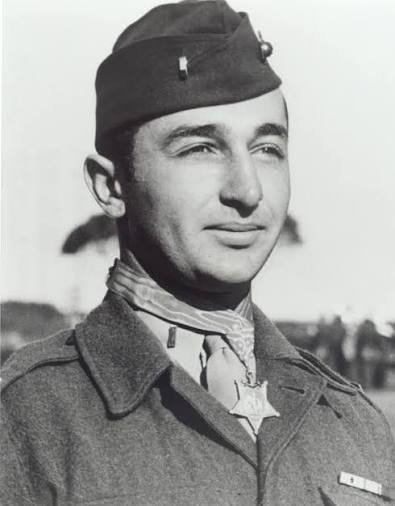
The citation for Paige’s Congressional Medal of Honor picks up the tale: “When the enemy broke through the line directly in front of his position, P/Sgt. Paige, commanding a machinegun section with fearless determination, continued to direct the fire of his gunners until all his men were either killed or wounded. Alone, against the deadly hail of Japanese shells, he fought with his gun and when it was destroyed, took over another, moving from gun to gun, never ceasing his withering fire.”
In the end, Sgt. Paige picked up the last of the 40-pound, belt-fed Brownings — the same design which John Moses Browning famously fired for a continuous 25 minutes until it ran out of ammunition at its first U.S. Army trial — and did something for which the weapon was never designed. Sgt. Paige walked down the hill toward the place where he could hear the last Japanese survivors rallying to move around his flank, the gun cradled under his arm, firing as he went.
The weapon did not fail.
Coming up at dawn, battalion executive officer Major Odell M. Conoley first discovered the answer to our question: How many able-bodied Marines does it take to hold a hill against two regiments of motivated, combat-hardened infantrymen who have never known defeat?
On a ridgecrest where the bodies were piled like cordwood, Mitchell Paige alone sat upright behind his 30-caliber Browning, waiting to see what the dawn would bring.
One hill: one Marine.
But there was a second problem. Part of the American line had fallen to the last Japanese attack. “In the early morning light, the enemy could be seen a few yards off, and vapor from the barrels of their machine guns was clearly visible,” reports Lippman. “It was decided to try to rush the position.”
For the task, Major Conoley gathered together “three enlisted communication personnel, several riflemen, a few company runners who were at the point, together with a cook and a few messmen who had brought food to the position the evening before.”
Joined by Paige, this ad hoc force of 17 Marines counterattacked at 5:40 a.m., discovering that “the extremely short range allowed the optimum use of grenades.” In the end, “The element of surprise permitted the small force to clear the crest.”
And that’s where the unstoppable wave of Japanese conquest finally crested, broke, and began to recede. On an unnamed jungle ridge on an insignificant island no one had ever heard of called Guadalcanal. Because of a handful of U.S. Marines, one of whom was a 24-year old Platoon Sergeant who kept his wits about him and never wavered.
Paige continued to serve in the Corps through World War 2, rotating back to Camp Lejune to train new recruits before the bloody Iwo Jima and Okinawa campaigns. Following the war, he was placed on Inactive Duty before being called up in 1950 for Korea. He continued in service before retiring in 1959 as a full colonel.
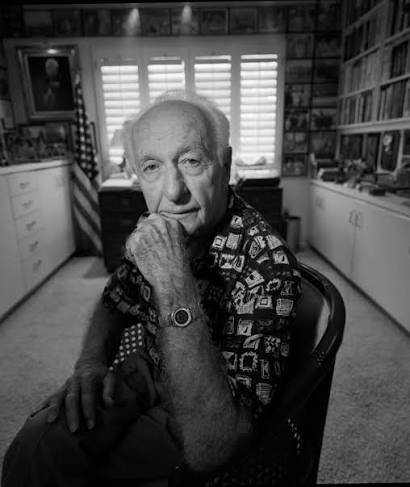
But who remembers, today, how close-run a thing it was — the ridge held by a single Marine, and how differently the course of the war might have continued, had he failed?
When the Hasbro Toy Co. called up some years back, asking permission to put the retired colonel’s face on some kid’s doll, Mitchell Paige thought they must have been joking.
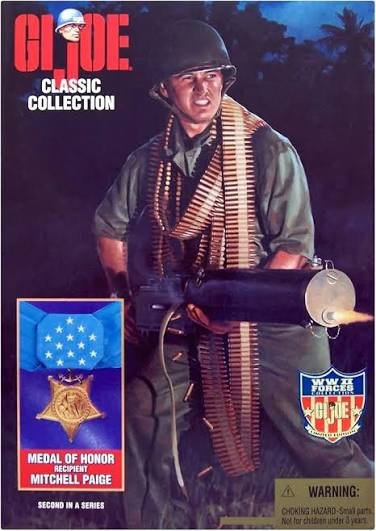
But they weren’t. That’s his mug, on the little Marine they call “GI Joe.”
And now you know.

Tough times make tough guys or guys tough. They are still there, we don’t know who they are until the time demands it.
Thanks, Shpip
Knowing is Not half the battle.
Great story.
I could totally do that given the opportunity. Totally. Although to be fair I chafe easily in the Jungle so I better not.
Good News, Pie, you’re more likely to end up on the Russian Front with all the drones. How’s your skeet shooting?
skeet is my middle name
The next day, their Mark XV torpedoes — carrying faulty magnetic detonators reverse-engineered from a First World War German design — proved so ineffective that the United States Navy couldn’t even scuttle the doomed and listing carrier Hornet with eight carefully aimed torpedoes.
This also doesn’t get enough press. Thanks for the whole article. I wish more of the war in the Pacific was taught, but in school I learned much more about the war in Europe. Plenty of discussions about the German camps and nothing in school about Unit 731, for example.
Japanese gave the world anime and were forgiven.
確かに
SAY THAT TO MY FACE IF YOU DARE
https://www.wordhippo.com/what-is/the-meaning-of/japanese-word-b884e9660da7bfbaa92e5ca0391b5f735a39e4b7.html
I got carried away due to the badassness of the post.
Also probably not the best Halloween costume to pick as a gaijin in Japan…
https://x.com/AsianDawn4/status/2117498445925871938?a=PXf-CK5mjeqgiKuyEgY&s=20
I don’t know why the bias. But Europe had a lot of maneuver warfare through places the students heard of while the pacific was a bunch of slogs at sea or on small islands nobody’s heard of outside of the context of the war.
Partly I think it the European immigration to the US.
For example, large parts of my grandmother’s family met their fate in the camps in Europe. But my grandfather who I heard curse approximately two times his entire life said nothing terrible about any of the Axis countries.
OTH, I specifically remember him saying “the Japanese weren’t very nice people during the war”. I’m sure this was driven in large part by the treatment of our POWs.
No clue. I’m seventh generation american. My ancestors have been here since the potato famine. The WWII generation of the tree was gone by the time I was old enough to talk to people. I had a grandfather pulling NASA capsules out of the ocean for the Navy during the moon race.
So I don’t have as much direct connection to the era.
Before now I could not have told you within 1,000 miles where the hell Guadalcanal is – and I’m a bit of a map nut. My guess would have been a couple thousand miles north.
That grandfather and his family have been here since before the revolution.
I’m about as much an American mongrel as one could be. But my father’s family is Irish (the wrong kind) as is my name. OTH, my wife’s family is Irish (the right kind). We have another “mixed marriage”.
My mom’s side of the family immigrated from what was then Germany (now Poland) sometime during the great immigration wave. None of them had a single word to say about it.
Also American soldiers got the opportunity to pick up French and Italian women. Marines in the Pacific were out of luck.
Great story.
+1
Suddenly the combat has changed, with the introduction of drones but still needs boots on the ground.
That’s only a hundred pounds or so.
In the Marines we were taught about the island hopping and there were so many stories like this.
Thanks Shpip, very well written.
Water-cooled machineguns are heavy, but the performance was just amazing. Not amazing for the time, amazing now.
If you linked a bunch of belts together and fired an M60E6, M240B, or even an M2 continuously for 25 minutes, it would melt into a puddle. I don’t think even an M134 could handle that level of abuse.
I’ve never gotten to fire one, but the weight was the reason we went away from them.
Most barrels can be changed quickly, the M2 .50 took a couple minutes, but apparently they have a quick change version that slots in like a M240.
Seems like that thing would be really hot, even with the cooling jacket. I guess when you’re single-handedly taking on hundreds of Japanese, some things drift to the back of the mind.
OT… so I just voted for two elephants and nothing else. In and out in 60 seconds. The machines are different in this state but otherwise the same experience as always. The big change is I went to show them my ID and they didn’t want it. Oh well. I guess my pinky-swear that I am a citizen will have to do.
Welcome to NJ! Now try to by ammunition without an ID.
My polling place made a guy go get his ID because his signature didn’t match.
I thought that was a bit wild.
In Texas it is always show the ID. Where I am it is paper ballots, dropped in a box for later input. At my other house it was paper ballots read by a machine instantly.
IIRC NY does signature verification too, and I had to remember to use my “old” signature that I haven’t used in a couple decades, and they compare it to what’s in their book which was probably copied from the DMV records.
In NJ I signed a piece of paper with my “current” signature (the same one is on my license that I just got) and I doubt it goes anywhere after that.
Thankfully we don’t do that. Your driver’s license gets scanned, then you smear a signature on one of those ipad readers like you are paying for dinner.
We now have to show ID and sign an affidavit under penalty of law that we live in the precinct and are eligible to vote.
This what you get when the elephants run the whole state.
And I hate the elephants in congress for not putting this in place across the nation for federal elections. And yet, god forbid the donkeys get control of things.
And in Hudson County…
https://x.com/MichaelCasey_/status/2117133659069182001
Summary execution of everyone responsible for the site.
Most secure elections
OT
So I am writing post on blinding and ranking whisky, mostly the process I used. But I have a dilemma. Should I at the end post the actual ranking of the whiskeys or is it better not to keep score or rank, given some of the whiskeys were gifts? some may want to see the ranking but maybe it is better to leave it out.
As long as you are respectful I don’t see an issue. Tastes and preference are subjective.
(Naturally this excludes deep dish and pineapple pizza. Also Cinnamon Roll Macaroni and Cheese should probably be added.)
https://people.com/kraft-mac-and-cheese-is-getting-into-the-holiday-spirit-with-cinnamon-roll-flavor-12207589
When I first started doing glib, flick, I debated having some form of movie score. I decided I didn’t want to deal with the complexity, or the BS. Besides, no one cared. They wanted to hear my thoughts about it, and not so much my rating. So my advice to you is give your thoughts, and don’t rate.
I will give a quick “Would I recommend this?” at the end, with the main objective of the article to entertain more than to inform.
“Would I recommend this?” with a no is worse than ranking 🙂
I’m pretty sure nobody gives a rat’s rear end what my opinions are.
off course. my opinions on the other hand are important.
If the whiskey is blinding you, you’re doing it wrong.
right now I have an anonymous ranking, I rank them by number but do not say which is which. I will take it out
Alternatively, you could make up ratings like MS does.
Hobbit:
I just fired up Firefox (on a Mac) and Monocle seems to be working fine (using Violentmonkey).
No Monocle changes since last month.
I am writing post on blinding and ranking whisky
“Well, you should have come to the first party. We didn’t get home ’til around four in the morning. I was blind for three days.”
Piracy on the high seas – or the bay in RI. One or the other.
Origin – Hudson County NJ – see above.
WATCH: Bodycam shows marina shootout with sailboat pirate in wealthy seaside resort town
https://www.foxnews.com/us/watch-bodycam-shows-marina-shootout-sailboat-pirate-wealthy-seaside-resort-town
I expect you all to come and pour out your misery in the evening post.
It will be a few days to figure out where ballots need to be manufactured.
why misery? either way it is all going down.